Immersive & Technical
On The Other Earth
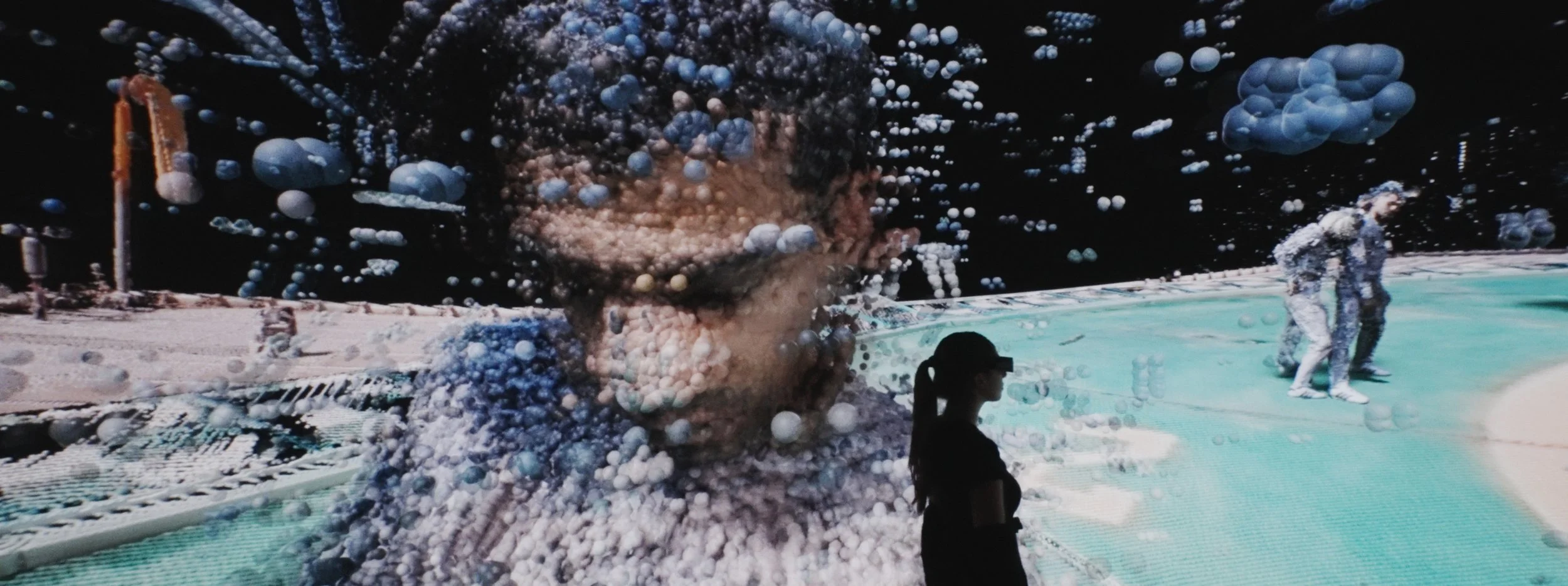
Inside the nVis 360° stereoscopic LED cylinder. Photo: Ravi Deepres.
On The Other Earth is the world's first post-cinematic choreographic installation — a collaboration with choreographer Sir Wayne McGregor, experienced inside a 12K LED cylinder projecting 360° stereoscopic film to groups of up to 20 people at a time. My work spanned the full production year, from initial research and pipeline decisions through to the final edit, alongside 3D animation and photogrammetry.
Primary role
Lead Editor
Researched and selected the optimal editing pipeline, then led the edit of the full film alongside video designer Ravi Deepres and Sir Wayne McGregor. Work took place across Hong Kong and London throughout 2025.
Secondary role
3D Animation & Photogrammetry
Animated LIDAR models in Blender, and used photogrammetry (Metashape + Lightroom) to create 3D models of the dancers — all matched to the same stereoscopic camera parameters as the live-action footage.
Stereoscopic editorial pipeline
After researching available software, I identified DaVinci Resolve as the sole professional NLE with a fully integrated stereoscopic workflow. Resolve treats the left- and right-eye camera feeds as a linked pair, enabling the editor to adjust convergence — the depth relationship between the two images — throughout the cut. Getting this right was critical: the dancers needed to feel completely natural within the curved cylindrical screen, neither too flat nor uncomfortably deep.
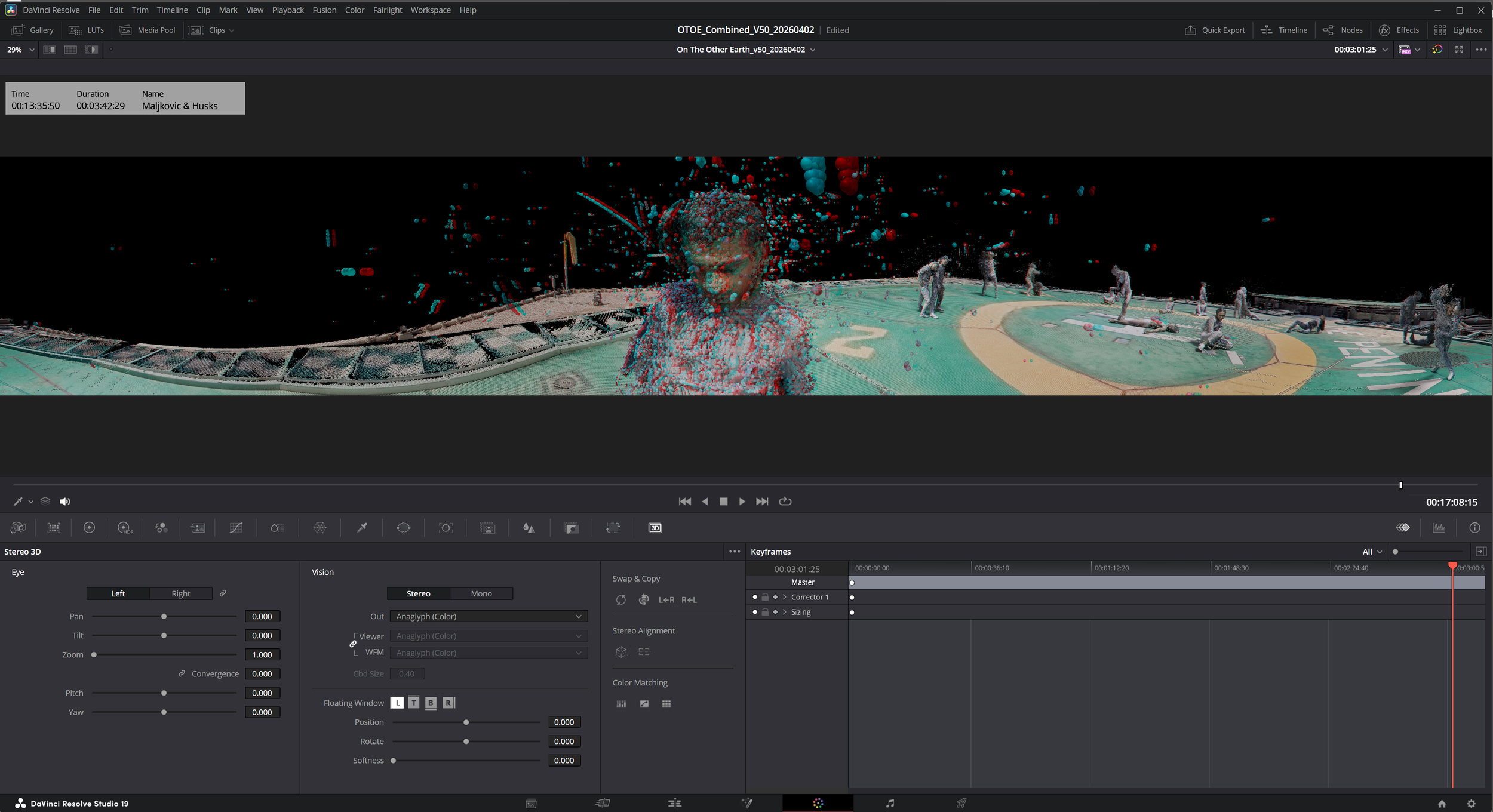
DaVinci Resolve Studio 19 — the stereoscopic 3D panel showing the anaglyph preview and convergence controls mid-edit. Screenshot: Luke Unsworth.
Final resolution
12,816 × 2,048 px
Screen dimensions
4 m high · 4 m radius
Vertical FoV
53.3°
Camera Z-scale
1:1 neutral
Total pixels
26 million
Cameras
2× ZCAM 4K & 3D Kandao 12K
The LED cylinder's 53.3° vertical field of view governed every editorial decision. The majority of the film was shot on the twin ZCAM 4K stereoscopic rig, with cameras set to a 1:1 Z-scale — the natural, neutral position — ensuring dancers appeared lifelike in scale to the audience standing at the cylinder's centre. Selected scenes were captured using a Kandao Obsidian — a 360°, stereoscopic, 12K camera — adding a further dimension to the visual language of the film. Matching these real-world parameters precisely inside Blender was equally essential for the animated sequences.
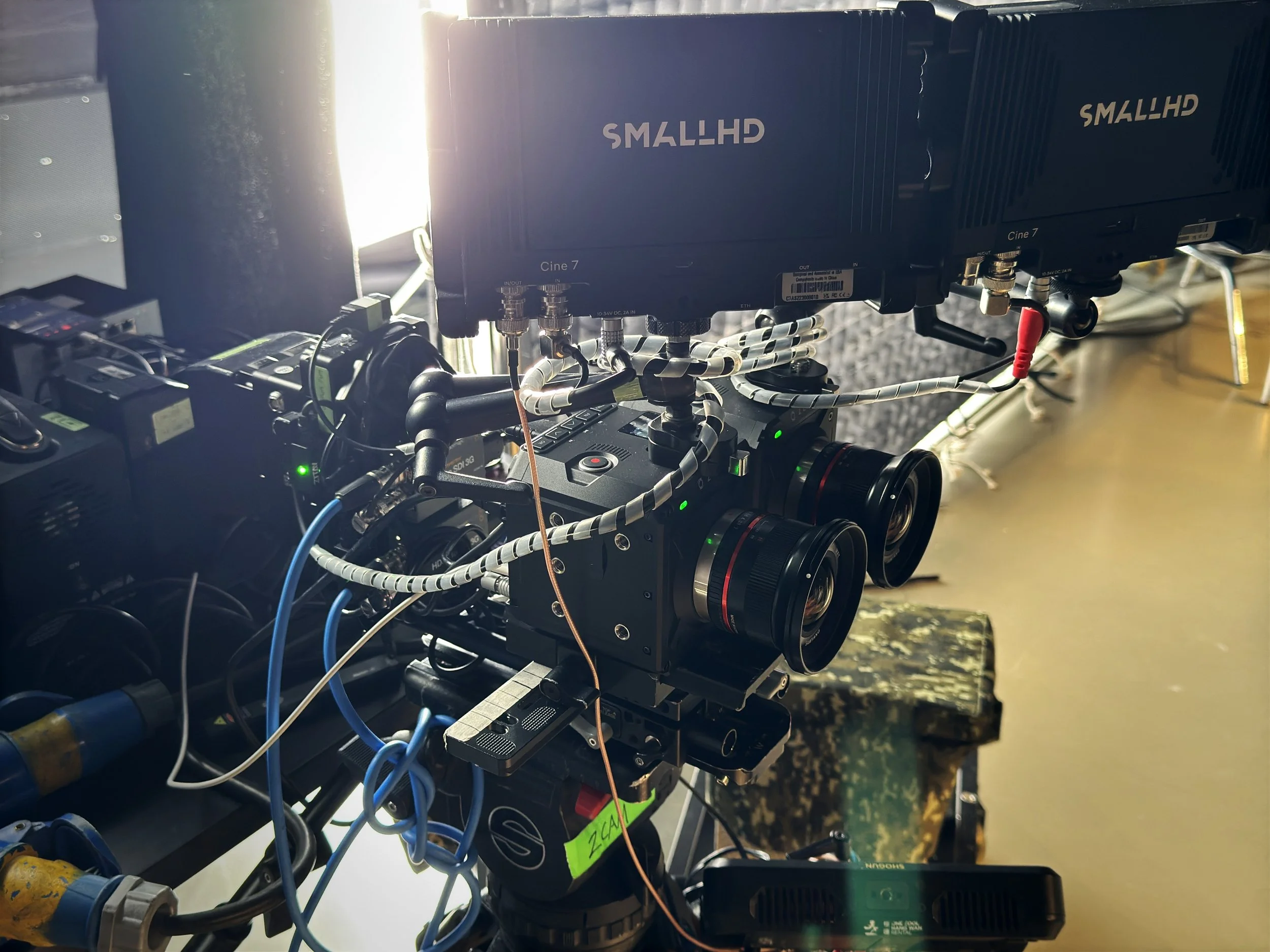
The stereoscopic ZCAM 4K rig — two cameras mounted side by side, representing the left and right eye perspectives. Photo: Luke Unsworth.
3D animation & photogrammetry
LIDAR data captured by Hong Kong-based surveyors JBA Surveys was imported into Blender for animation, with CloudCompare used for point cloud processing. Separately, I used photogrammetry — processing arrays of still photographs through Metashape — to build high-fidelity 3D models of the dancers. All animated sequences used a stereoscopic camera rig in Blender configured to exactly match the real-world camera setup, maintaining consistent depth and scale between live-action and CG elements across the final film.
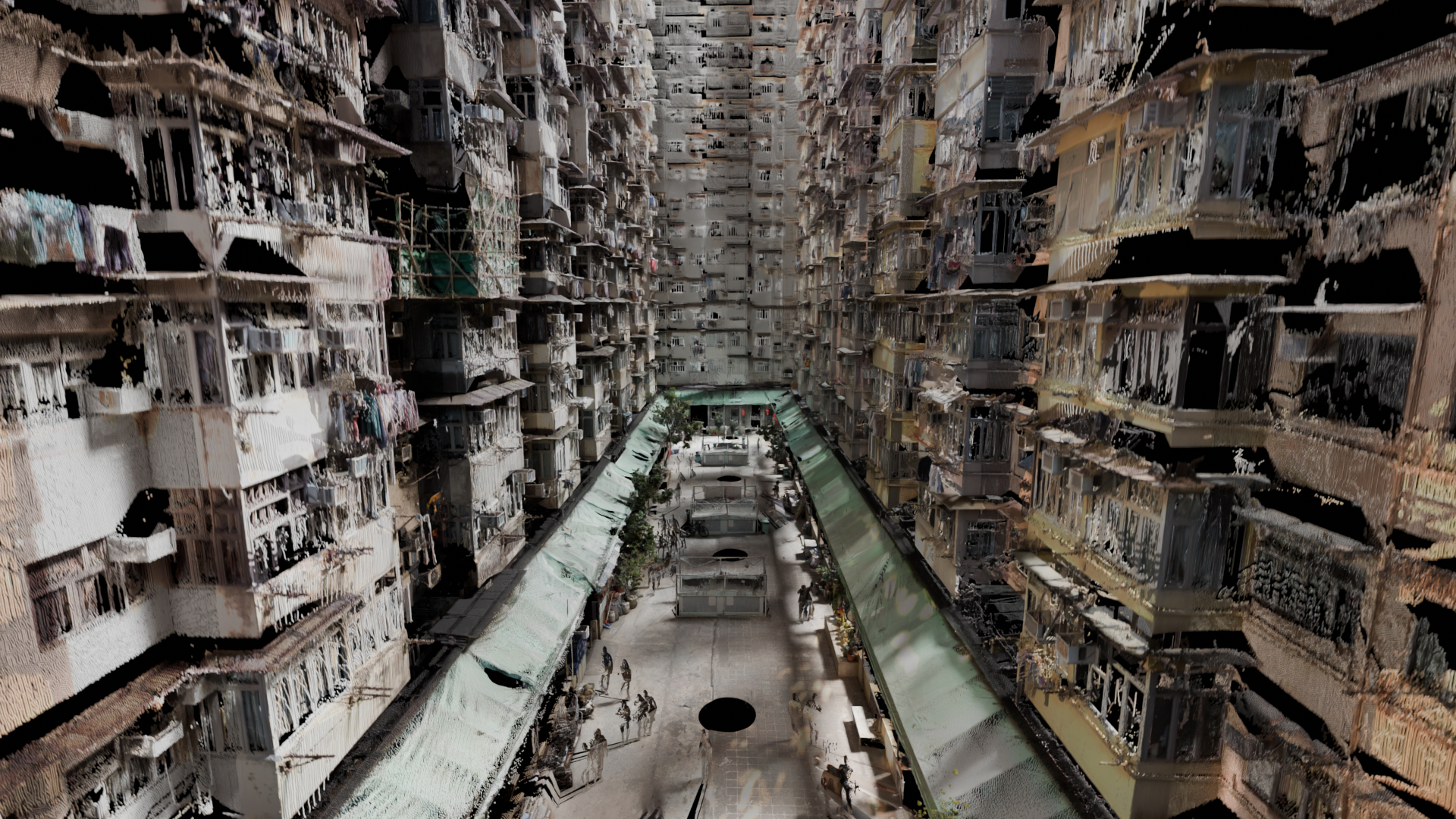
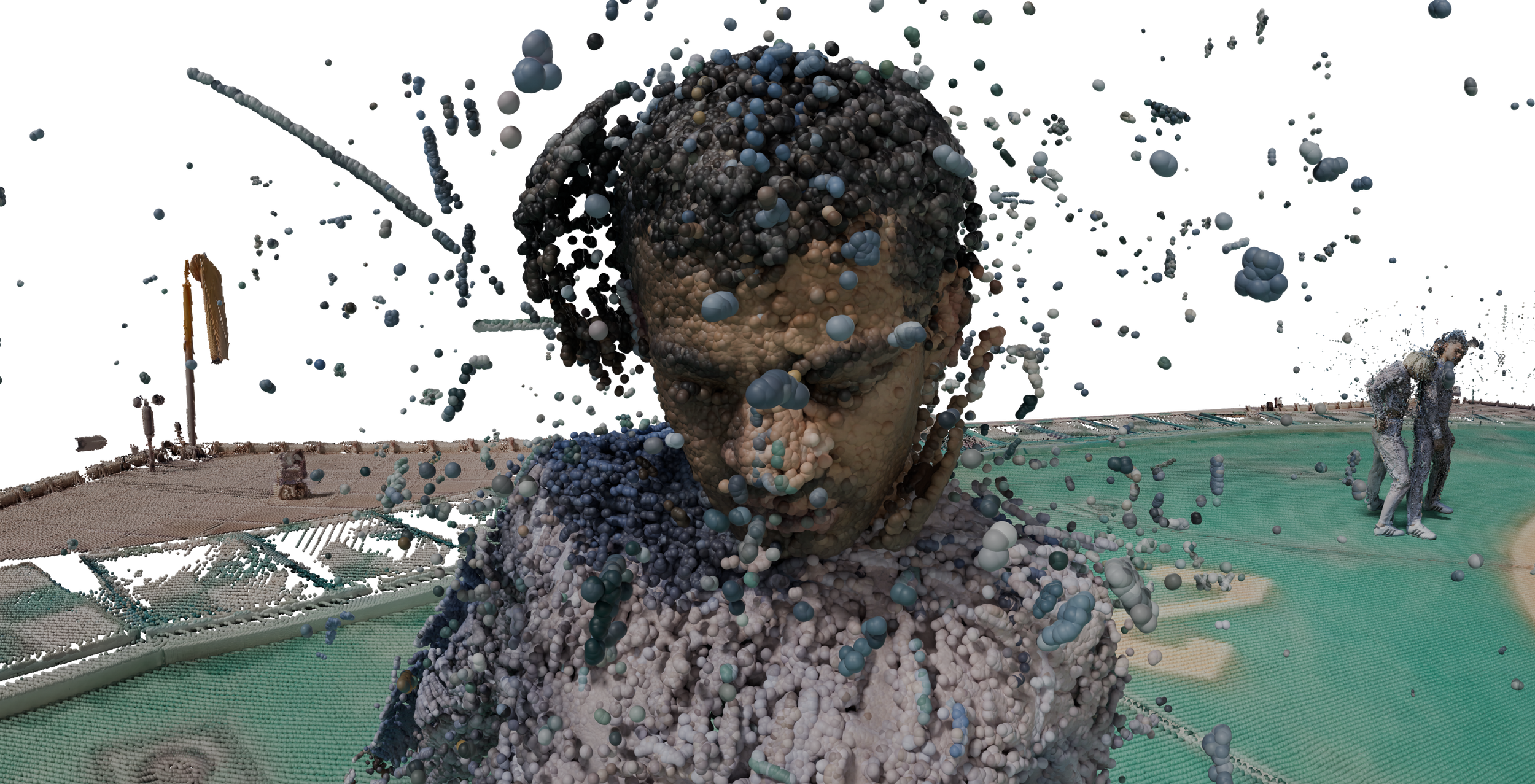
Blender renders: a photogrammetric dancer model within a LIDAR environment (left), and an animated LIDAR scan of a Hong Kong location (right). Images: Luke Unsworth.
Working inside the nVis cylinder
Much of the editorial and review process took place inside the nVis screen itself — the only way to accurately judge stereoscopic depth, convergence, and scale at the correct field of view. The production team worked at editing stations set up within the cylinder, reviewing footage projected at full resolution around them.

The production team inside the nVis cylinder during a review session. Photo: Ravi Deepres.
Technical advisors & collaborators
We worked with leading specialists in stereoscopic science and visual art to ensure the film met the highest standard for viewer comfort, perceptual accuracy, and cinematic design.
Theresa Baumgartner
Berlin-based visual artist & award-winning lighting designer — cinematic design collaborator on OTOE
Paul Bourke
Stereoscopic science advisor & immersive display researcher
Ravi Deepres
Video designer — editorial collaborator throughout production
Jeffrey Shaw & Sarah Kenderdine
nVis 360 3D technology & concepts, Hong Kong Baptist University
Chris Parks
Stereo Supervisor — Gravity, Pirates of the Caribbean: At World’s End, Jack the Giant Slayer
State-of-the-art apotheosis
Financial Times
Shimmering new dance spectacular
The Guardian — ★★★★
Radical new immersive dance experience
The Art Newspaper